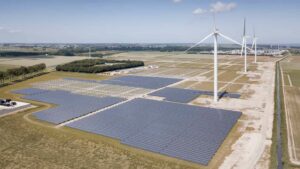
Efuelution embarks on an innovative journey with a feasibility study for a client’s venture into green hydrogen production in the Netherlands, utilizing a balanced mix of renewable energy sources: a 50 MW PV park and a 50 MW wind farm. A key challenge emerges from integrating these disparate energy sources to power electrolyzers efficiently due to their differing production patterns. Additionally, the project faces potential risks associated with net congestion, complicating the consistent supply of renewable energy to the electrolysis process, and thereby affecting the Levelized Cost of Hydrogen (LCoH).
Solution
A comprehensive approach, emphasizing technical, operational, and financial simulations, is employed to navigate these challenges:
Technical and Operational Simulations:
Energy Integration and Optimization: Advanced simulations model the integration of solar and wind energy outputs to optimize electrolyzer performance. This involves developing algorithms that dynamically adjust electrolyzer operation based on real-time energy availability, ensuring maximal efficiency.
Net Congestion Mitigation: Detailed analyses of the grid’s capacity to handle inputs from both solar and wind sources are conducted. Solutions such as on-site energy storage and demand response systems are simulated to alleviate potential congestion, ensuring a stable energy supply for hydrogen production.
System Resilience and Scalability: Technical simulations also test the resilience of the integrated renewable system against environmental variables and grid fluctuations. Scalability assessments explore the feasibility of expanding the plant’s capacity to adapt to future energy demands or production increases.
Financial Simulations:
Economic Viability and LCoH Analysis: Financial models assess the project’s economic sustainability, focusing on capital investment, operational costs, and projected revenues. The impact of improved electrolyzer efficiency and congestion mitigation solutions on reducing the LCoH is thoroughly evaluated, alongside exploring government incentives and market dynamics for green hydrogen in the Netherlands.
Project Description
The proposed project aims to pioneer a sustainable pathway for green hydrogen production in the Netherlands by leveraging an innovative mix of 50 MW from both solar and wind energy sources. This balanced approach addresses the inherent variability in renewable energy generation, enhancing the operational efficiency of electrolyzers and reducing the LCoH. Through meticulous technical and operational simulations, the study offers robust solutions to potential net congestion, ensuring reliable energy supply and system scalability. Financial simulations underpin the project’s economic strategy, painting a comprehensive picture of its viability.
Positioned to make a significant contribution to the Netherlands’ renewable energy targets and hydrogen economy, this project not only showcases the potential of integrating diverse renewable sources for sustainable hydrogen production but also sets a precedent for addressing grid congestion challenges. By embodying innovative energy management strategies and scalable solutions, the initiative aims to pave the way for future renewable hydrogen projects, both nationally and globally.